


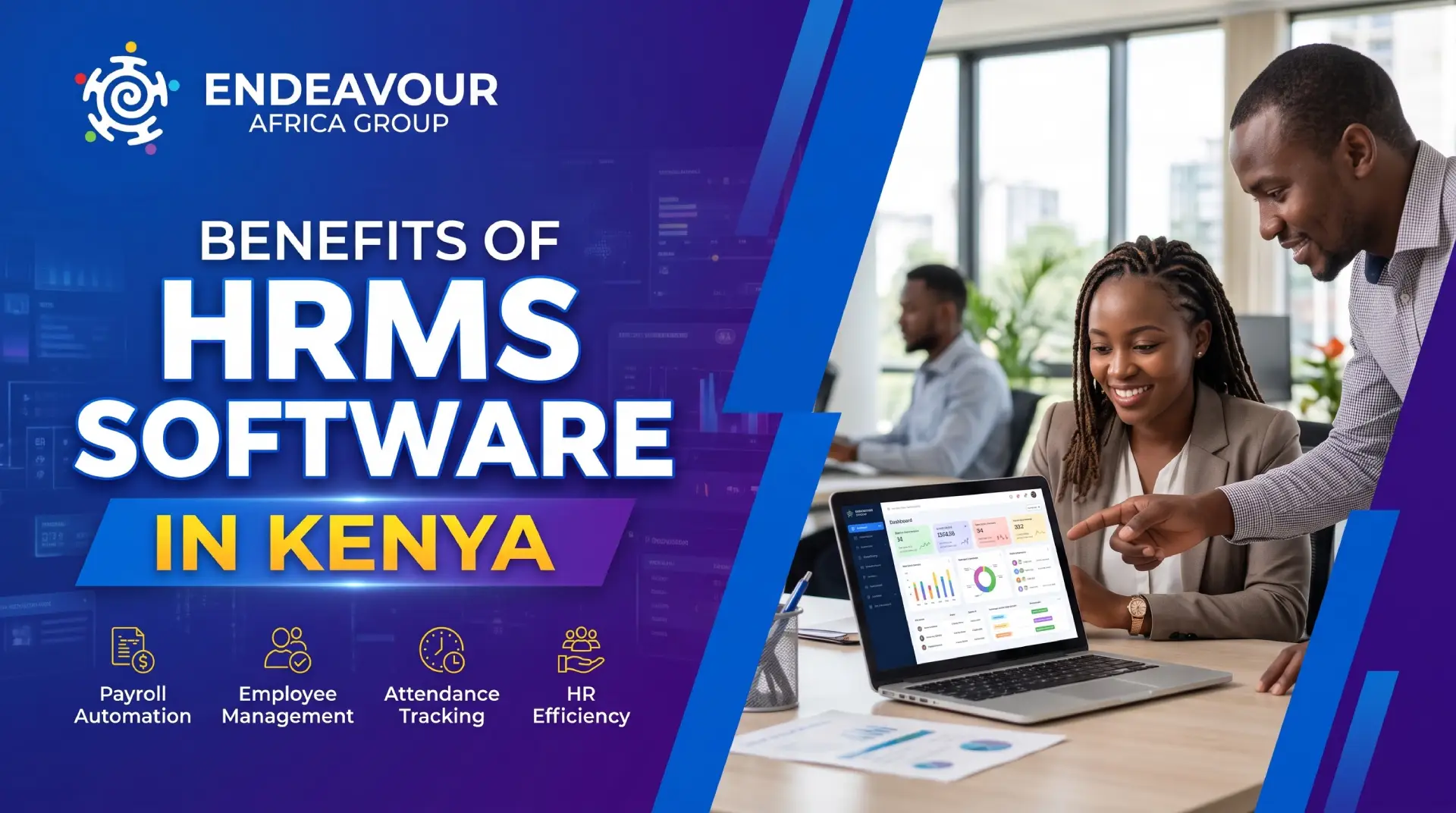
Managing employees efficiently is essential for business growth. However, maintaining employee records, tracking attendance, approving leave, and processing salaries manually can consume valuable time and increase the risk of errors. HRMS software in Kenya helps businesses organise these activities, simplify human resource management, and improve operational efficiency.
Endeavour Africa provides resources for businesses exploring HRMS, payroll, and HR management software solutions in Kenya. Understanding the benefits of these systems can help organisations identify opportunities to improve their HR processes and manage their workforce more effectively.
1. Automates Repetitive HR Tasks
One of the main benefits of HRMS software for Kenyan businesses is the ability to automate routine administrative activities. HR teams often spend hours updating employee information, maintaining attendance records, processing leave requests, and preparing reports.
An HRMS can centralise these tasks and automate workflows, reducing paperwork and repeated data entry. This allows HR professionals to spend more time on employee development, recruitment, and workforce planning.
Businesses looking to improve their HR operations can explore HR management software in Kenya from Endeavour Africa.
2. Simplifies Payroll Management
Payroll processing involves salary calculations, allowances, overtime, deductions, and payslips. Manual processing can create errors, especially when employee numbers increase or salary structures become more complex.
HRMS and payroll software in Kenya can connect employee records with payroll processes, reduce duplicate data entry, and simplify monthly salary preparation.
Businesses should verify that their chosen solution supports applicable Kenyan payroll requirements, including PAYE, NSSF, and SHIF contributions under current regulations.
To learn more about payroll solutions, explore the best payroll software in Kenya and the best HRMS payroll software in Kenya.
3. Improves Employee Record Management
Keeping employee information in paper files and separate spreadsheets can make it difficult to locate accurate records. HRMS software provides a central place to maintain employee profiles, employment details, documents, and relevant work history.
With organised records, authorised staff can retrieve information more efficiently and prepare reports with less manual effort. Access permissions also help businesses control who can view or update confidential information.
Explore HRMS software in Kenya to learn more about software options for improving employee information management.
4. Makes Attendance and Leave Tracking Easier
Manual attendance registers and leave spreadsheets can become difficult to manage, particularly for companies with multiple departments, shifts, or locations.
An HRMS can simplify attendance monitoring, leave applications, approval workflows, and leave balance calculations. Depending on the software, it may also integrate with biometric attendance devices or other time-tracking systems.
These features help managers understand employee availability, plan workloads, and maintain consistent records. Employees may also be able to submit leave requests and check their balances through a self-service portal.
5. Reduces Administrative Work and Operating Costs
Repeated data entry, paperwork, and manual calculations increase the time required to complete HR activities. Automating these processes can help reduce administrative effort and minimise avoidable errors.
Although HRMS software involves subscription and implementation costs, businesses can assess its value by considering the time saved, improved record accuracy, and reduction in repetitive tasks.
For small and medium-sized businesses, choosing software that matches the available budget is particularly important. Explore HRMS for SMEs in Kenya for information relevant to growing organisations.
6. Supports Better Employee Experience
Employees benefit when HR processes are clear, accessible, and timely. Delays in leave approvals, difficulty accessing payslips, and uncertainty about employee records can create unnecessary frustration.
Depending on the platform, an HRMS may allow employees to access payslips, submit requests, view leave balances, and update permitted personal information without contacting HR for every task.
These self-service features can make routine interactions more convenient and free HR staff to handle more complex employee concerns.
7. Improves HR Reporting and Decision-Making
Business owners and managers need accurate information to make workforce decisions. HRMS reporting tools can help organisations review employee numbers, attendance patterns, leave usage, payroll expenses, and other workforce data.
For example, reports showing frequent overtime may help managers review staffing levels or scheduling practices. Attendance reports can also help identify patterns that require further investigation.
Better reporting supports informed planning, provided the underlying employee data is accurate and reports are interpreted in the right context.
8. Strengthens Data Security and Recordkeeping
Employee records contain confidential information, including salary details, contact information, and employment documents. Protecting this data is an important responsibility for every organisation.
Businesses should look for HRMS features such as role-based access, secure data transmission, audit logs, and regular backups. They should also check that the provider’s data handling practices support applicable Kenyan data protection requirements.
A well-managed HRMS can improve control over employee information, but businesses must still configure access appropriately and follow good data security practices.
Why Explore HRMS Solutions from Endeavour Africa?
Endeavour Africa provides online resources for businesses researching HRMS, payroll management, and HR software options in Kenya. These resources can help organisations understand available software categories and identify features relevant to their operations.
Businesses can begin by exploring HR management software in Kenya, reviewing HRMS software in Kenya, and learning about HRMS for SMEs in Kenya.
Before selecting a solution, confirm the actual product features, pricing, implementation requirements, payroll capabilities, and customer support available from the provider.
Frequently Asked Questions
1. What are the main benefits of HRMS software for Kenyan businesses?
The main benefits include automating HR tasks, organising employee records, simplifying attendance and leave management, improving payroll processes, reducing paperwork, and supporting better workforce reporting.
2. How does HRMS software help with payroll in Kenya?
When payroll functionality is included, an HRMS can help calculate salaries, manage deductions, generate payslips, and maintain payroll records. Businesses should verify that the system supports current Kenyan statutory requirements.
3. Is HRMS software suitable for small businesses in Kenya?
Yes. Small businesses can use HRMS software to manage employee records, track attendance, process leave requests, and simplify payroll. The right solution should match the business’s size, budget, and requirements.
4. Can HRMS software reduce business costs?
It can reduce administrative effort, paperwork, and repetitive data entry. The actual financial benefit depends on software costs, implementation, employee adoption, and the processes being automated.
5. How does HRMS software improve employee productivity?
By simplifying routine HR activities, employees and managers can spend less time on paperwork and administrative follow-ups. Self-service tools and faster approvals can also improve access to common HR services.
6. How can I choose the right HRMS software in Kenya?
Identify your HR requirements, compare features and pricing, check security and payroll compliance, and request a demonstration. Confirm that the system can support your current workforce and future business growth.
Conclusion
The benefits of HRMS software for Kenyan businesses extend beyond reducing paperwork. The right system can streamline HR tasks, improve employee record management, simplify payroll, strengthen reporting, and support a better employee experience.
Endeavour Africa provides resources for businesses researching HRMS and payroll software solutions in Kenya. By understanding your organisation’s needs and comparing available options, you can choose a solution that supports efficient workforce management and long-term business growth.
Comments are closed