



Is your business ready for KRA’s 2026 eTIMS validation or Is your business carrying unnecessary tax risk?
From January 2026, KRA’s income tax validation process cross-checks declared income and expenses against data from TIMS/eTIMS invoices, withholding tax and import records. For businesses, this means invoicing is no longer just about generating a bill. Your transaction records need to be accurate, connected and ready
Read More
Improving Production Planning with ERP for Plastic Manufacturing
Production planning is the backbone of every successful plastic manufacturing business. Whether you’re producing plastic packaging, PET bottles, PVC pipes, water tanks, household products, or industrial components, efficient planning ensures that production runs smoothly, customer orders are delivered on time, and operational costs remain under control.
Read More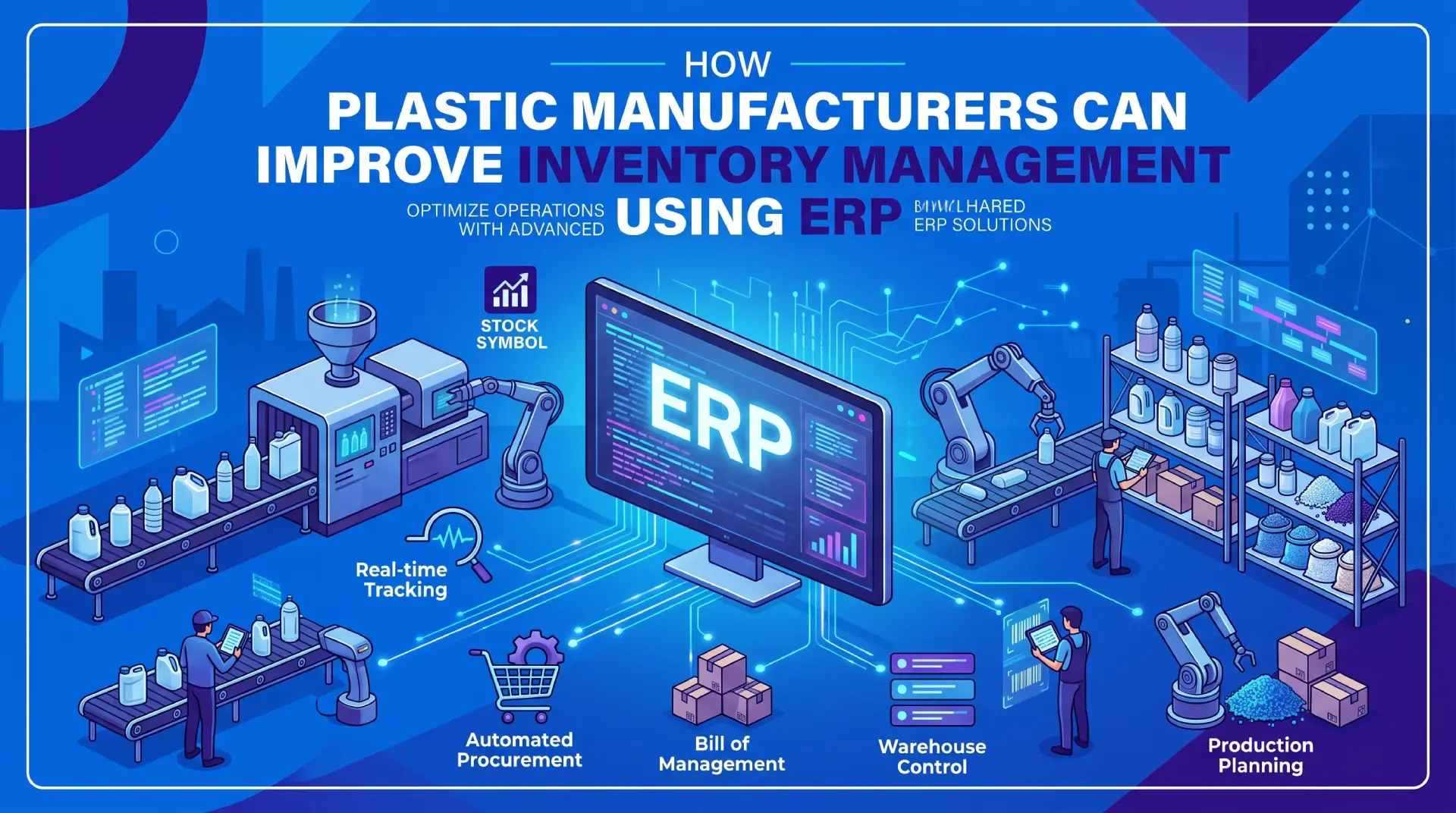
How Plastic Manufacturers Can Improve Inventory Management Using ERP
Inventory management is one of the most critical aspects of plastic manufacturing. From plastic resins and additives to packaging materials and finished products, every item must be tracked accurately to ensure smooth production and timely deliveries. Poor inventory management can result in production delays, excess stock,
Read More
Best ERP Software for Plastic Manufacturing Companies in Kenya
Plastic manufacturing is one of Kenya’s fastest-growing industries, serving sectors such as packaging, construction, agriculture, healthcare, food processing, and consumer goods. As customer demand increases, manufacturers must improve production efficiency, reduce material waste, manage inventory accurately, and maintain consistent product quality. Managing these operations with spreadsheets
Read More
How ERP for Plastic Manufacturing Helps Reduce Raw Material Waste
Raw material waste is one of the biggest challenges facing plastic manufacturers. Whether you’re producing plastic containers, bottles, packaging materials, pipes, water tanks, household products, or industrial components, excessive material wastage directly impacts production costs and profitability. Many manufacturers still rely on manual inventory tracking and
Read More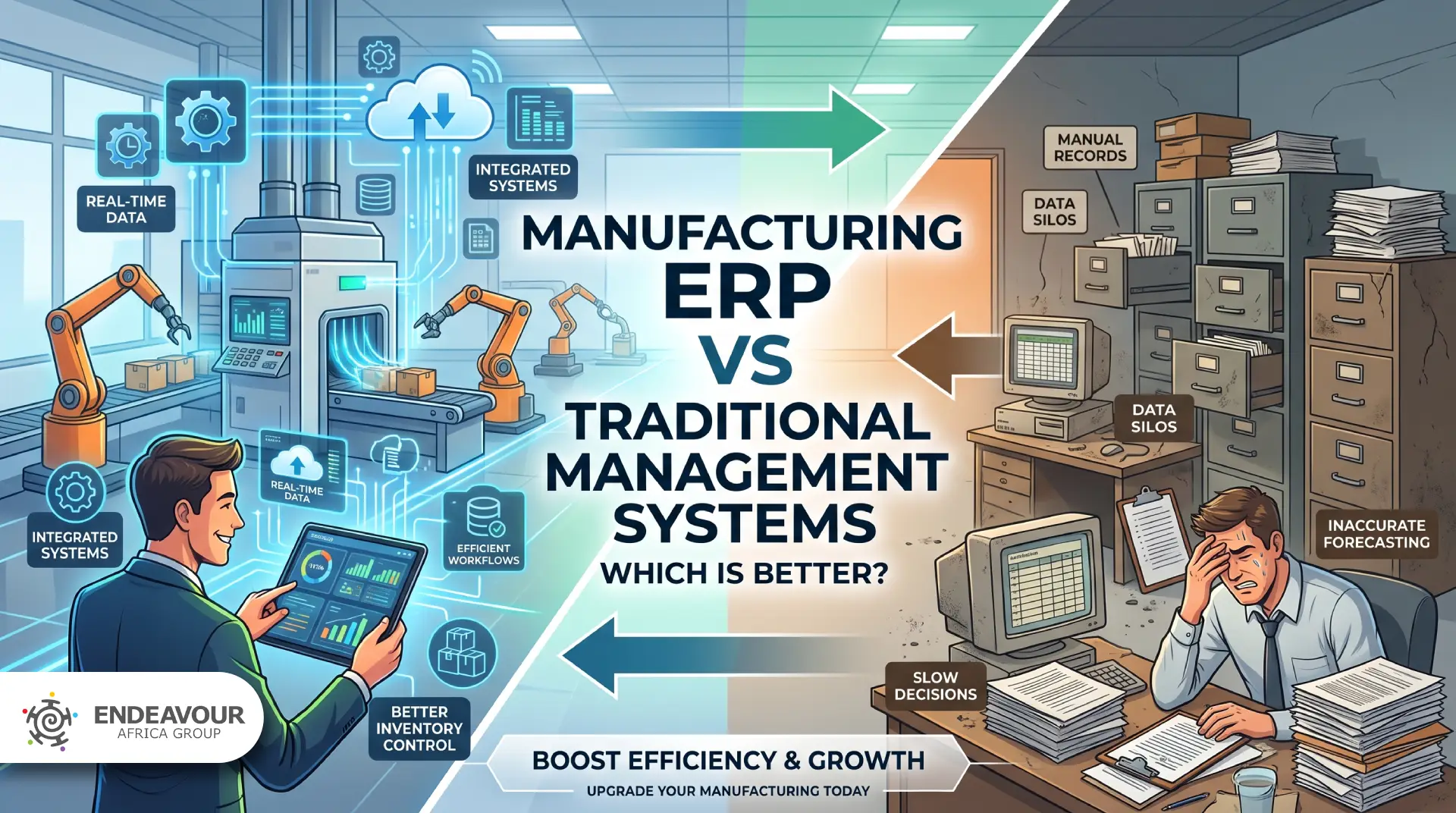
Manufacturing ERP vs Traditional Management Systems: Which Is Better?
Manufacturing businesses in Kenya are facing increasing pressure to improve efficiency, reduce operational costs, and meet customer expectations. While many companies still rely on spreadsheets, paper records, or standalone software to manage their operations, these traditional management systems often struggle to keep up with modern manufacturing
Read More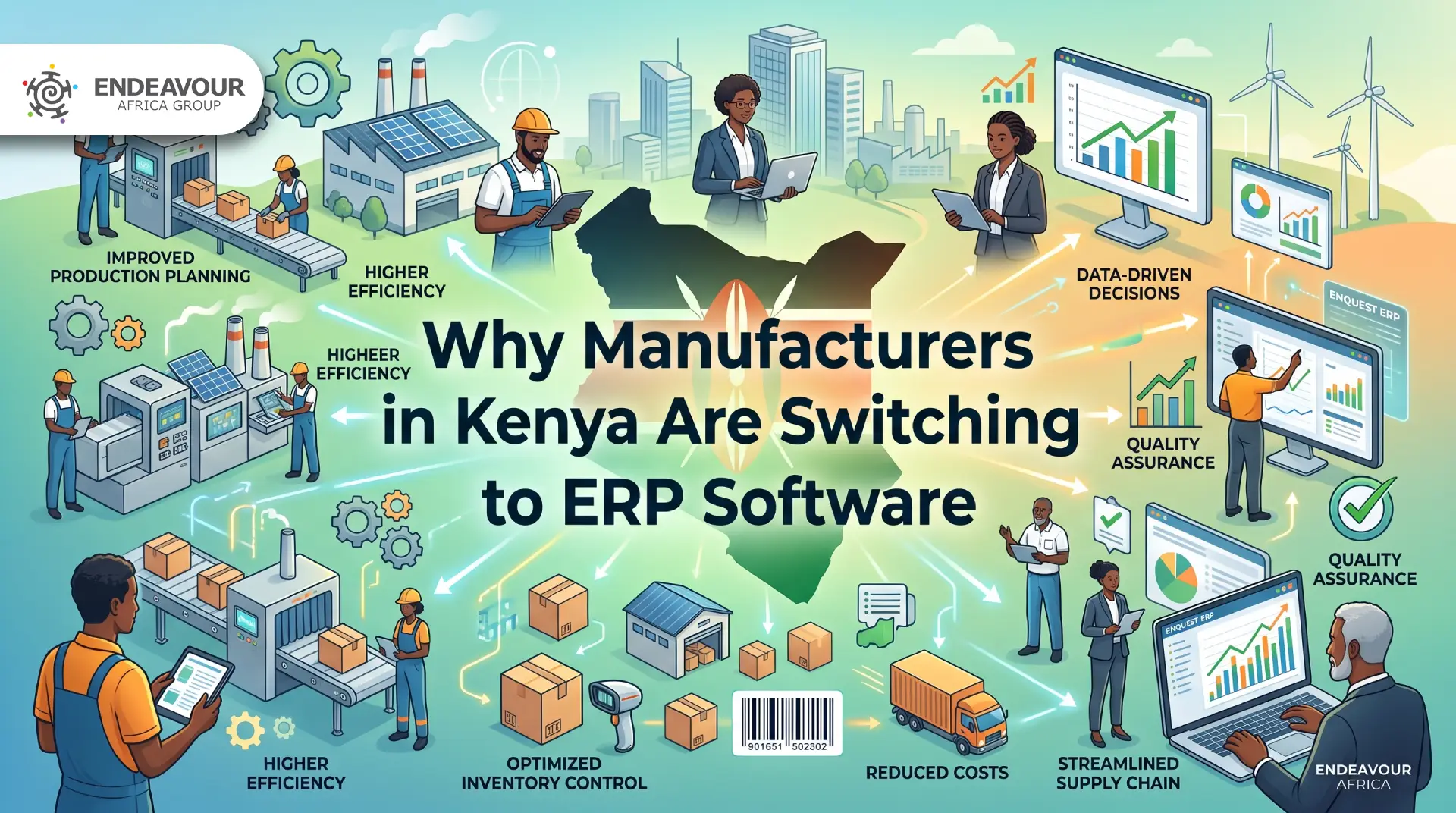
Why Manufacturers in Kenya Are Switching to ERP Software
Kenya’s manufacturing industry is experiencing rapid transformation as businesses embrace digital technologies to improve productivity and remain competitive. From food processing and plastics to clothing, pharmaceuticals, chemicals, and industrial manufacturing, companies are realizing that manual processes and disconnected software are no longer sufficient. Manufacturers today need
Read More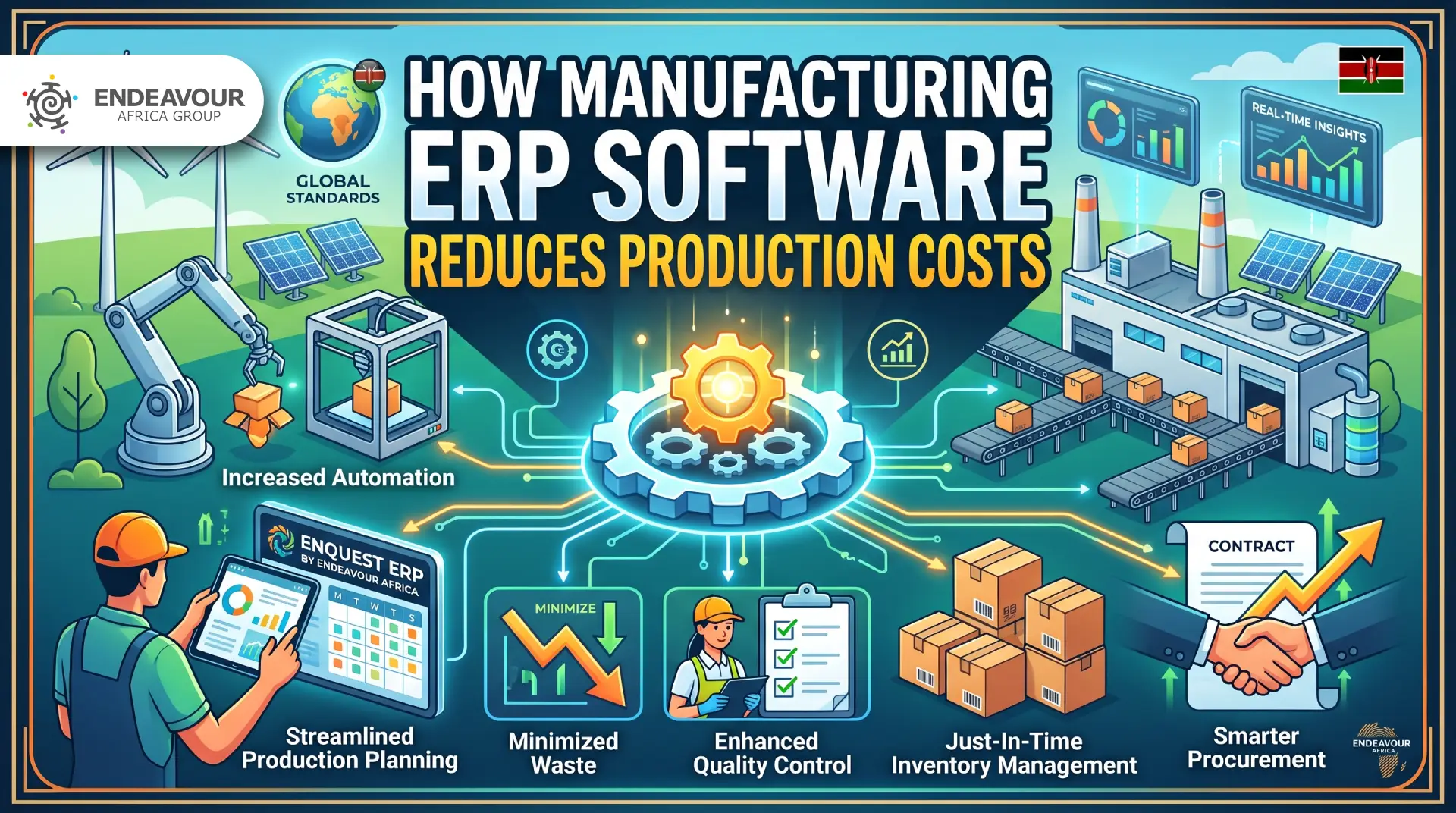
How Manufacturing ERP Software Reduces Production Costs
Controlling production costs is one of the biggest challenges facing manufacturing businesses in Kenya. Rising raw material prices, labor expenses, inventory losses, machine downtime, and inefficient production planning can significantly reduce profitability. Many manufacturers still rely on spreadsheets or disconnected software systems, making it difficult to
Read More
Top Benefits of ERP for Manufacturing Businesses in Kenya
Kenya’s manufacturing sector is becoming increasingly competitive, requiring businesses to improve efficiency, reduce operational costs, and respond quickly to customer demands. Whether you operate in plastic manufacturing, clothing production, food processing, pharmaceuticals, chemicals, or industrial manufacturing, managing production manually can limit growth and profitability. A modern
Read More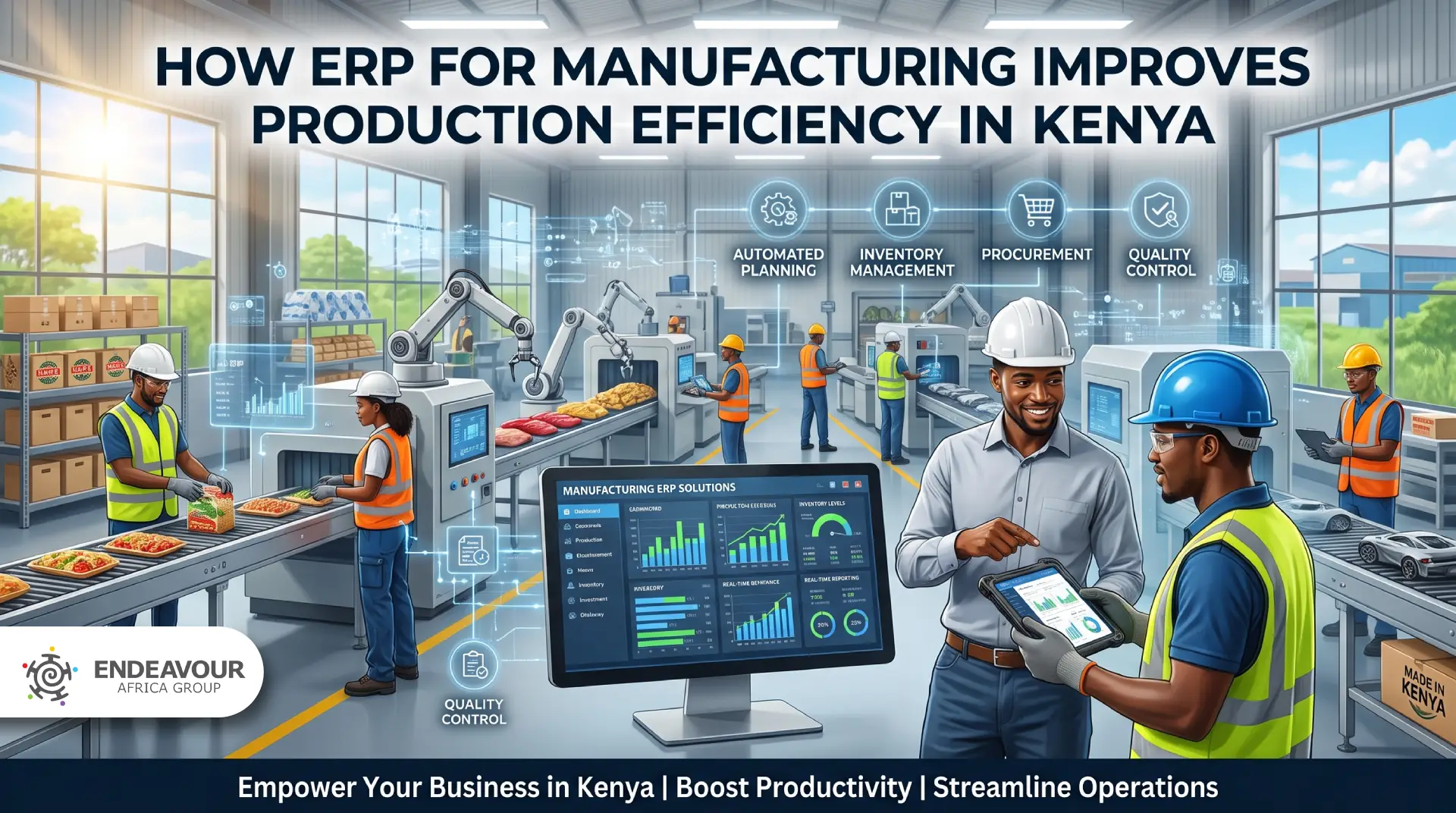
How ERP for Manufacturing Improves Production Efficiency in Kenya
Manufacturing businesses in Kenya are under constant pressure to increase productivity, reduce operational costs, and deliver quality products on time. Managing production manually or using multiple disconnected systems often leads to production delays, inventory shortages, inaccurate costing, and inefficient resource utilization. A modern ERP for Manufacturing
Read More