


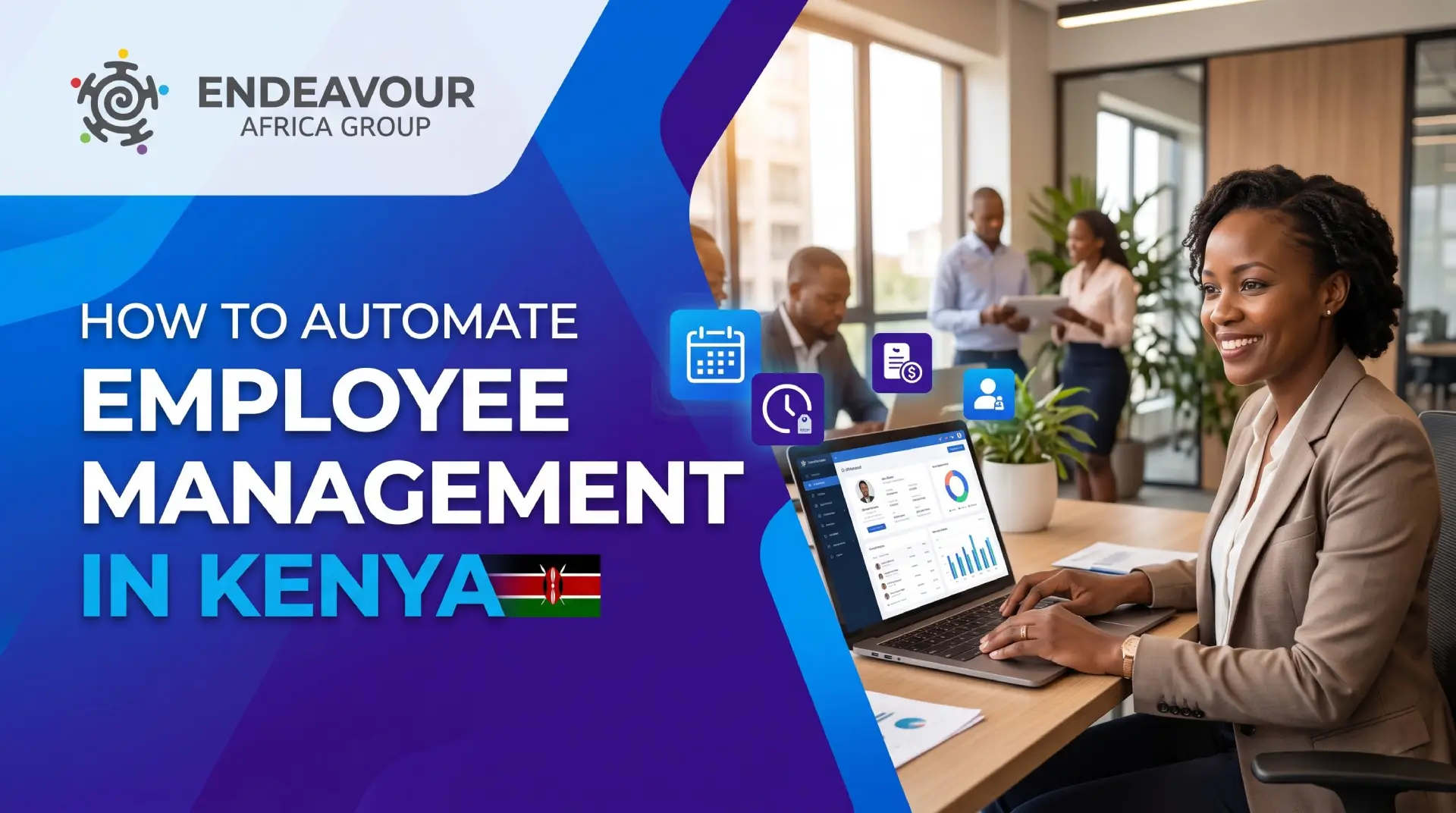
Managing employee records, attendance, leave requests, and payroll manually can consume valuable time for Kenyan businesses. Employee management software in Kenya helps organisations automate routine HR tasks, improve accuracy, and manage their workforce more efficiently.
Whether you run a small business or a growing company, automating HR processes can simplify daily operations and support long-term growth.
What Is Employee Management Automation?
Employee management automation uses digital tools to handle HR activities such as employee onboarding, attendance tracking, leave approvals, performance monitoring, and payroll processing.
Instead of maintaining multiple spreadsheets and paper records, businesses can manage employee information through a centralised HR management system in Kenya.
5 Ways to Automate Employee Management in Kenya
1. Digitise Employee Records
Store employee details, contracts, identification documents, job roles, and employment history in one secure system. Digital records make information easier to access and update.
Businesses can explore HRMS software in Kenya to understand how an integrated system can simplify workforce administration.
2. Automate Attendance and Leave Management
Manual attendance registers can lead to errors and make tracking employee working hours difficult. Automated attendance systems record working hours, monitor absences, and help calculate overtime.
Employees can also submit leave requests online, while managers approve requests and monitor leave balances through a central dashboard.
3. Simplify Payroll Processing
Payroll automation helps calculate salaries, allowances, overtime, and applicable statutory deductions. It also simplifies payslip generation and payroll reporting.
A reliable payroll management system in Kenya should support current requirements for PAYE, NSSF, SHIF, and the Affordable Housing Levy, as applicable.
Learn more about the best HRMS and payroll software in Kenya to explore integrated HR and payroll solutions.
4. Improve Employee Performance Tracking
Digital HR tools help businesses set employee goals, record performance reviews, monitor progress, and maintain appraisal records. This makes performance management more organised and helps managers identify training needs.
5. Use Employee Self-Service Tools
Employee self-service portals allow staff to access payslips, check leave balances, update permitted personal information, and submit requests without contacting HR for every task.
This reduces administrative workload and improves communication between employees and management.
Benefits of Employee Management Automation
Implementing employee management software in Kenya offers several benefits:
- Saves time: Reduces repetitive administrative tasks.
- Improves accuracy: Minimises manual data entry and calculation errors.
- Enhances data security: Supports controlled access to confidential employee records.
- Supports compliance: Helps maintain accurate records and calculate applicable statutory deductions.
- Improves productivity: Allows HR teams to focus on employee development and business priorities.
Businesses should also evaluate data protection measures and ensure their systems support applicable Kenyan employment and statutory requirements.
How to Choose the Right HR Software
Before investing in HR management software in Kenya, assess your employee count, business requirements, budget, and existing systems. Look for features such as employee records, attendance tracking, leave management, payroll integration, reporting, and secure data access.
Choose a scalable solution that can support your business as it grows and provides regular updates for changing statutory requirements.
Conclusion
Automating employee management helps Kenyan businesses reduce paperwork, improve HR efficiency, and maintain organised workforce records. By adopting suitable HRMS software in Kenya, organisations can simplify employee administration, streamline payroll, and create a more productive workplace.
Comments are closed