


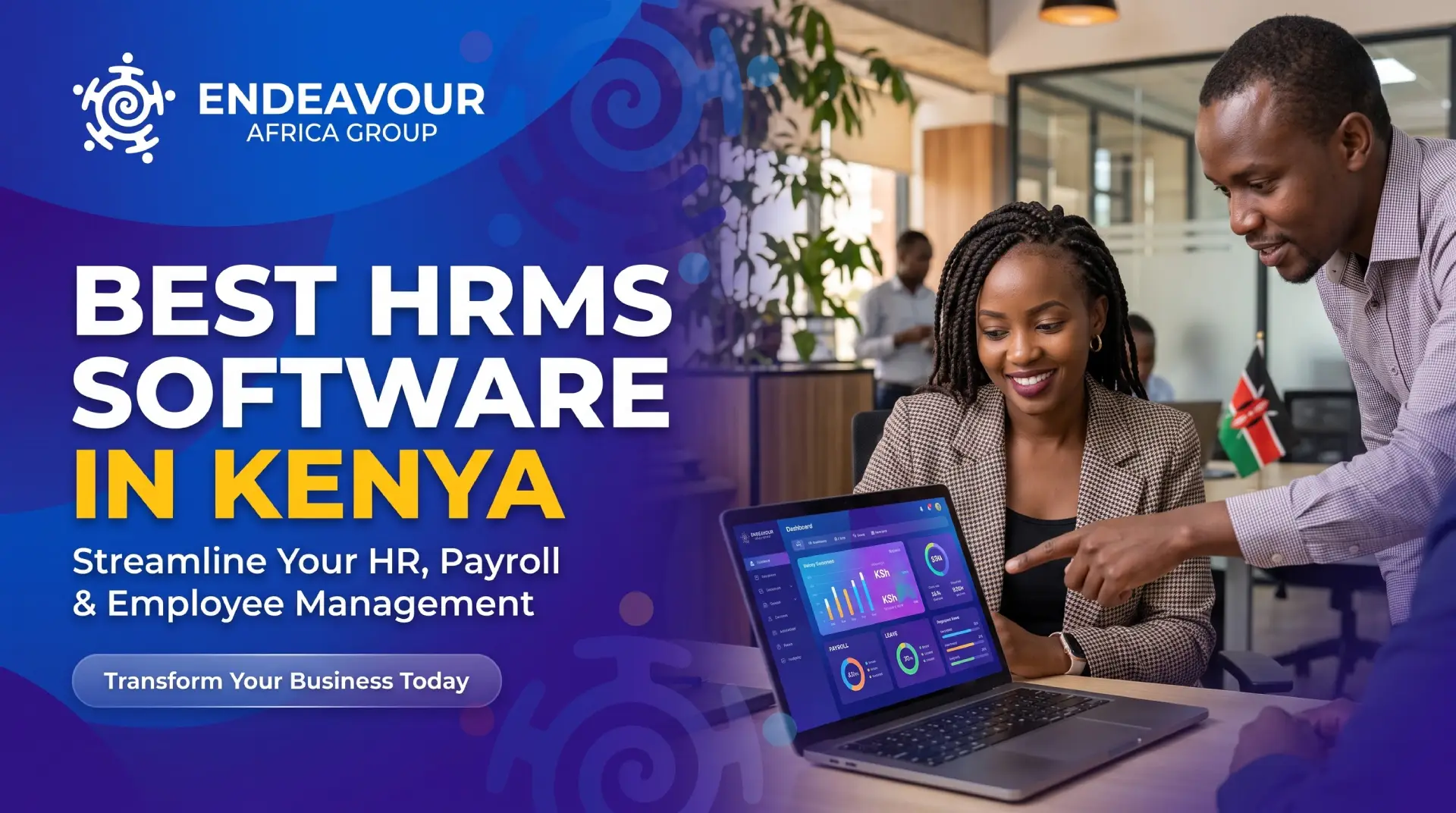
Choosing the best HRMS software in Kenya is an important decision for businesses that want to manage employees efficiently, simplify payroll, and reduce administrative work. Whether you operate a small business, a growing company, or a large organisation, the right Human Resource Management System (HRMS) can help you organise employee information, automate routine tasks, and make better workforce decisions.
However, with different HR software solutions available, selecting the right platform requires careful consideration of your business needs, budget, payroll requirements, and future growth plans.
1. Understand Your Business HR Requirements
Before investing in HRMS software in Kenya, identify the challenges your HR team faces. Some businesses struggle with manual attendance records, while others spend hours calculating salaries, managing leave requests, or preparing employee reports.
Start by listing the tasks you want to simplify. These may include employee record management, recruitment, attendance tracking, leave management, performance reviews, and payroll processing.
For example, a company with 20 employees may need basic employee records, leave tracking, and payroll management. An organisation with hundreds of employees may require advanced reporting, multiple department management, employee self-service, and automated approval workflows.
Understanding your requirements helps you avoid paying for unnecessary features or choosing software that cannot support your operations.
You can explore HR management software in Kenya to learn more about how digital HR tools support everyday business activities.
2. Check Payroll Features and Kenyan Statutory Compliance
Payroll management is one of the most important considerations when selecting HRMS and payroll software in Kenya. Incorrect salary calculations, missed deductions, and delayed payments can create problems for both employees and employers.
Choose a system that supports salary calculations, payslip generation, overtime, bonuses, allowances, loans, and applicable statutory deductions.
For Kenyan businesses, check whether the software supports relevant payroll obligations, including Pay As You Earn (PAYE), National Social Security Fund (NSSF) contributions, Social Health Insurance Fund (SHIF) contributions, and other applicable deductions under current regulations.
The system should allow updates when tax rates, contribution limits, or statutory requirements change. Ask the provider how frequently payroll rules are updated and whether the software generates the reports your business needs.
Businesses comparing dedicated payroll solutions can read this guide to the best payroll software in Kenya.
For organisations looking to combine employee management and payroll in one platform, the guide to the best HRMS payroll software in Kenya provides another useful starting point.
3. Look for Essential HRMS Features
Not every HRMS offers the same functionality. Compare the following features before making your decision.
Employee information management: The system should maintain organised employee records, including job roles, contact details, employment history, and relevant documents.
Attendance and leave management: Look for attendance tracking, shift management where required, leave balances, and approval workflows. These features can reduce paperwork and make employee scheduling easier.
Recruitment and onboarding: Recruitment tools can help HR teams manage applications, track candidates, and organise joining formalities for new employees.
Performance management: Performance reviews, goal tracking, and feedback tools can help managers monitor progress and support employee development.
Employee self-service: Employees should be able to access their payslips, view leave balances, update permitted personal details, and submit requests without contacting HR for every small task.
Reporting and analytics: Useful reports can help managers understand workforce costs, absenteeism, employee turnover, and other operational trends.
The right feature set depends on your organisation. Prioritise tools that solve genuine problems rather than selecting a system simply because it offers more features.
You can also explore HRMS software in Kenya to understand the broader HR technology options available to local businesses.
4. Choose Software That Fits Your Budget and Business Size
The cost of HRMS software varies according to employee numbers, features, implementation requirements, and the provider’s pricing model.
Some providers charge a monthly fee per employee, while others offer fixed subscription plans or customised enterprise pricing. Before choosing a solution, ask for a complete breakdown of the costs.
Consider subscription fees, setup charges, employee data migration, staff training, technical support, and any additional charges for payroll or advanced modules.
Small and medium-sized enterprises should look for affordable systems that cover essential HR and payroll requirements without unnecessary complexity. Growing companies should also check whether they can add employees, departments, and new features without changing platforms.
For more guidance, explore HRMS for SMEs in Kenya.
A practical approach is to compare the expected cost with the time saved, reduction in administrative errors, and improvements in HR efficiency. The cheapest option may not provide the best long-term value.
5. Evaluate Data Security and Privacy
HR systems contain sensitive information, including employee identification details, salaries, bank information, and employment records. Protecting this information should be a priority.
Look for security features such as role-based access controls, secure data transmission, regular backups, audit logs, and appropriate authentication measures.
Ask the provider how employee information is stored, who can access it, how backups are managed, and what happens if your organisation decides to move to another system.
Businesses should also check whether the provider’s data handling practices support applicable Kenyan data protection requirements, including the Data Protection Act, 2019.
A secure HRMS helps reduce the risk of unauthorised access and supports responsible handling of employee information.
6. Check Ease of Use, Integration, and Customer Support
Even a feature-rich system may not deliver good results if employees find it difficult to use. Request a live demonstration before purchasing and ask HR staff to test common tasks such as approving leave, generating payslips, and updating employee records.
Check whether the software integrates with existing accounting systems, attendance devices, or other business applications your organisation uses.
Reliable customer support is equally important. Ask about support hours, onboarding assistance, training resources, and response times when technical problems occur.
You can explore HR Master in Kenya as part of your research into HR software options.
7. Request a Demo Before Making the Final Decision
Before committing to a long-term subscription, prepare a shortlist of two or three suitable providers. Use the same set of questions to compare each solution.
Ask the provider to demonstrate a complete monthly payroll process, an employee leave request, attendance reporting, and the generation of management reports.
If possible, use a trial period to test the platform with realistic business scenarios. Confirm that the software can handle your employee numbers, payroll structure, approval processes, and reporting requirements.
Also review the contract, service terms, data export options, and any additional implementation costs.
Frequently Asked Questions About HRMS Software in Kenya
1. What is HRMS software?
HRMS software is a digital platform used to manage human resource activities such as employee records, attendance, leave, recruitment, performance management, and payroll. It helps organisations centralise information and automate routine tasks.
2. Which HRMS software is best for businesses in Kenya?
The best solution depends on your employee numbers, budget, payroll requirements, and desired features. Compare local payroll support, security, reporting, ease of use, integrations, and customer service before selecting a provider.
3. How much does HRMS software cost in Kenya?
Pricing varies by provider, features, number of employees, and implementation requirements. Request detailed quotations and check for setup fees, training costs, support charges, and additional module fees before making a decision.
4. Is HRMS software suitable for small businesses?
Yes. HRMS for SMEs in Kenya can help small businesses reduce paperwork, organise employee records, manage leave, and process payroll more efficiently. Businesses can begin with essential features and expand as their needs grow.
5. Can HRMS software handle payroll and statutory deductions?
Many systems support payroll calculations and statutory deductions applicable in Kenya. However, businesses should verify that the selected platform reflects current tax and contribution rules and provides appropriate payroll reports.
6. Is cloud-based HRMS software better than traditional software?
Cloud-based HRMS solutions can provide access from different locations, automatic updates, and reduced infrastructure maintenance. However, businesses should evaluate internet access, security controls, data handling, pricing, and provider reliability before deciding.
7. How long does it take to implement an HRMS?
Implementation time depends on employee numbers, data quality, payroll complexity, integrations, and training requirements. A small business with straightforward needs may implement a system faster than a large organisation with multiple departments and complex approval workflows.
Conclusion
Choosing the best HRMS software in Kenya involves more than comparing prices or counting features. Businesses should evaluate their HR requirements, payroll compliance, employee experience, data security, integration options, and long-term costs.
Take time to compare providers, request demonstrations, and test essential workflows before making a final decision. A well-chosen HRMS can reduce administrative work, improve payroll accuracy, support better employee management, and give your organisation more time to focus on business growth.
Comments are closed