


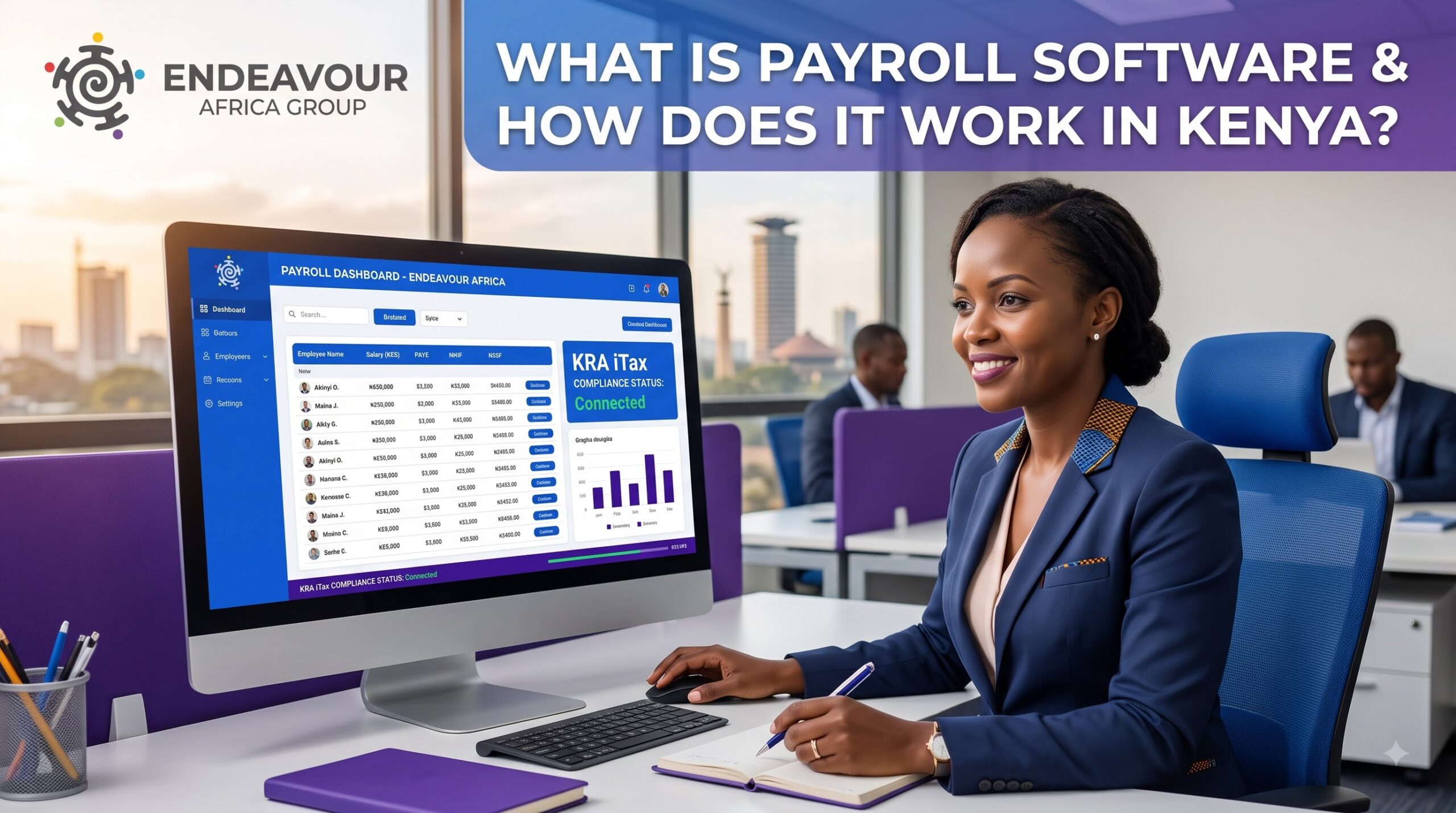
Managing employee salaries manually can become difficult as a business grows. Payroll teams may need to calculate salaries, deductions, allowances, taxes, payslips and payroll reports every month.
This is where payroll software in Kenya can help.
Payroll software is a digital system that automates and organises payroll processes, allowing businesses to manage employee salary information and payroll calculations through a centralised platform.
For Kenyan businesses, choosing the right payroll system can help reduce repetitive administrative work, improve payroll accuracy and make employee management more organised.
What Is Payroll Software?
Payroll software is a business application designed to manage the process of paying employees.
Instead of maintaining payroll information across spreadsheets and manual records, businesses can use software to organise employee information and automate key payroll activities.
A typical payroll solution can help businesses manage:
- Employee salary information
- Allowances and deductions
- Payroll calculations
- Payslips
- Payroll records
- Payroll reports
- Employee payroll history
For businesses looking for a complete solution, Best Payroll Software in Kenya provides more information about payroll software solutions offered by Endeavour Africa.
How Does Payroll Software Work in Kenya?
The basic payroll process is straightforward. Employee information is entered into the system, payroll rules and relevant information are applied, and the system processes the payroll based on the configured data.
Step 1: Add Employee Information
The first step is to maintain employee information within the system.
This may include:
- Employee details
- Job information
- Salary information
- Allowances
- Deductions
- Employment status
Having this information in one system reduces the need to maintain multiple spreadsheets or disconnected records.
Step 2: Configure Payroll Information
The payroll system uses the employee information and configured payroll settings to calculate the employee’s pay.
Depending on the business and its requirements, this can include salary components, allowances, deductions and applicable statutory calculations.
This is one of the main reasons businesses use payroll management software in Kenya instead of relying entirely on manual calculations.
Step 3: Process Payroll
Once the payroll information is ready, the system processes the payroll for the selected period.
The software can calculate the relevant salary components and produce payroll information for review.
Automation can make the monthly payroll process more consistent and reduce repetitive manual work.
Step 4: Generate Payslips and Reports
After payroll processing, businesses can generate employee payslips and payroll reports.
These records can help employees understand their salary information while giving management and finance teams better visibility into payroll costs.
Step 5: Maintain Payroll Records
Payroll software also provides a structured way to maintain historical payroll information.
Instead of searching through multiple files, authorised users can access relevant payroll records through the system.
What Are the Benefits of Payroll Software in Kenya?
Using payroll software in Kenya can provide several practical benefits for businesses.
Reduced Manual Work
Automating repetitive payroll activities can reduce the amount of time payroll teams spend on manual calculations and data entry.
Better Payroll Accuracy
A structured payroll process can help reduce errors associated with repetitive manual calculations and duplicated data.
Centralised Employee Information
Employee and payroll information can be maintained in one system instead of being spread across different spreadsheets and files.
Faster Payroll Processing
Automation can make recurring payroll activities more efficient, particularly for businesses managing a growing workforce.
Better Payroll Visibility
Payroll reports can give management a clearer view of employee-related costs and payroll information.
Payroll Software vs Manual Payroll
With manual payroll, businesses may depend on spreadsheets, calculators, emails and separate employee records.
As the number of employees increases, this approach can become harder to manage.
With a modern payroll system in Kenya, businesses can centralise payroll information and automate important parts of the payroll process.
| Manual Payroll | Payroll Software |
| Spreadsheet-based records | Centralised employee records |
| Manual calculations | Automated calculations |
| Repetitive data entry | Reduced manual work |
| Difficult historical tracking | Organised payroll history |
| Manual reporting | System-generated reports |
Is Payroll Software Part of HRMS?
Payroll and HR are closely connected because payroll depends on accurate employee information.
An HRMS payroll software in Kenya solution can combine payroll with wider HR management functions, allowing businesses to manage employee information and payroll through a more connected system.
If your business needs HR and payroll functionality together, explore Best HRMS & Payroll Software in Kenya.
The HRMS & Payroll solution from Endeavour Africa can be considered by businesses looking to connect employee management and payroll processes.
How Endeavour Africa Supports Business Management
Endeavour Africa provides business software solutions designed to help businesses manage their operations through connected systems.
For organisations looking for the best payroll software in Kenya, the focus should not only be on processing salaries. Businesses should also consider how payroll connects with employee management, reporting and wider operational requirements.
You can learn more about payroll software solutions in Kenya and how they can support more structured payroll management.
Endeavour Africa also provides industry-focused ERP solutions for businesses operating in different sectors, including:
- ERP for Clothing Manufacturing in Kenya
- ERP for Manufacturing in Kenya
- ERP for Oil Manufacturing in Kenya
- ERP for Plastic Manufacturing in Kenya
This broader approach can help businesses consider payroll alongside their overall business management and ERP requirements.
Who Should Use Payroll Software in Kenya?
Payroll software in Kenya can be useful for businesses of different sizes, particularly organisations that have growing employee numbers or payroll processes that are becoming difficult to manage manually.
It can be suitable for:
- Small and medium-sized businesses
- Growing companies
- Manufacturing businesses
- Organisations with multiple employees
- Businesses looking to automate payroll
- Companies that want more organised employee records
The right solution should be selected according to the organisation’s workforce, payroll requirements and future growth.
What Should You Check Before Choosing Payroll Software?
Before investing in a payroll system, businesses should evaluate whether it fits their actual requirements.
Consider:
- Payroll automation
- Employee management
- Payroll calculations
- Payslip generation
- Reporting
- Statutory payroll requirements
- Ease of use
- Scalability
- Integration with other business processes
- Vendor support
The best payroll software in Kenya is ultimately the solution that fits your business processes and helps your team manage payroll more efficiently.
Conclusion
So, what is payroll software and how does it work in Kenya?
In simple terms, payroll software helps businesses organise employee information, process payroll, calculate salary components, generate payslips and maintain payroll records through a digital system.
For growing Kenyan businesses, moving from manual payroll processes to payroll software in Kenya can help reduce administrative work, improve organisation and provide better visibility into payroll.
With an integrated approach to HR and payroll, businesses can also create a more connected employee management process.
Frequently Asked Questions
1. What is payroll software in Kenya?
Payroll software in Kenya is a digital system that helps businesses manage employee salaries, deductions, payroll calculations, payslips, payroll records and reporting.
2. How does payroll software work?
Payroll software works by storing employee information, applying configured payroll rules and processing salary information. It can then generate payslips and payroll reports.
3. Why do businesses use payroll software?
Businesses use payroll software to reduce manual payroll work, organise employee information, improve payroll processing and simplify reporting.
4. Is payroll software useful for small businesses in Kenya?
Yes. Small businesses can use payroll software to organise payroll processes and reduce manual administrative work as their workforce grows.
5. Can payroll software calculate employee deductions?
Payroll systems can be configured to handle applicable salary deductions and payroll calculations according to the business’s requirements.
6. Can payroll software generate payslips?
Yes. Many payroll systems can generate employee payslips after payroll has been processed.
7. What is the difference between payroll software and HRMS?
Payroll software focuses primarily on payroll processes, while an HRMS payroll software in Kenya solution can combine payroll with broader employee and HR management functions.
8. Can payroll software help reduce payroll errors?
Automating repetitive calculations and maintaining payroll information in a structured system can help reduce errors associated with manual payroll processing.
9. How do I choose the best payroll software in Kenya?
Consider payroll features, employee management, statutory requirements, reporting, ease of use, scalability, integration capabilities and vendor support before choosing the best payroll software in Kenya.
10. Does Endeavour Africa provide payroll software in Kenya?
Yes. Endeavour Africa provides payroll and HR software solutions designed to help businesses manage employee and payroll processes through a more connected system.
Comments are closed